“O wretched man that I am! Who will deliver me from this body of death?” Romans 7:24
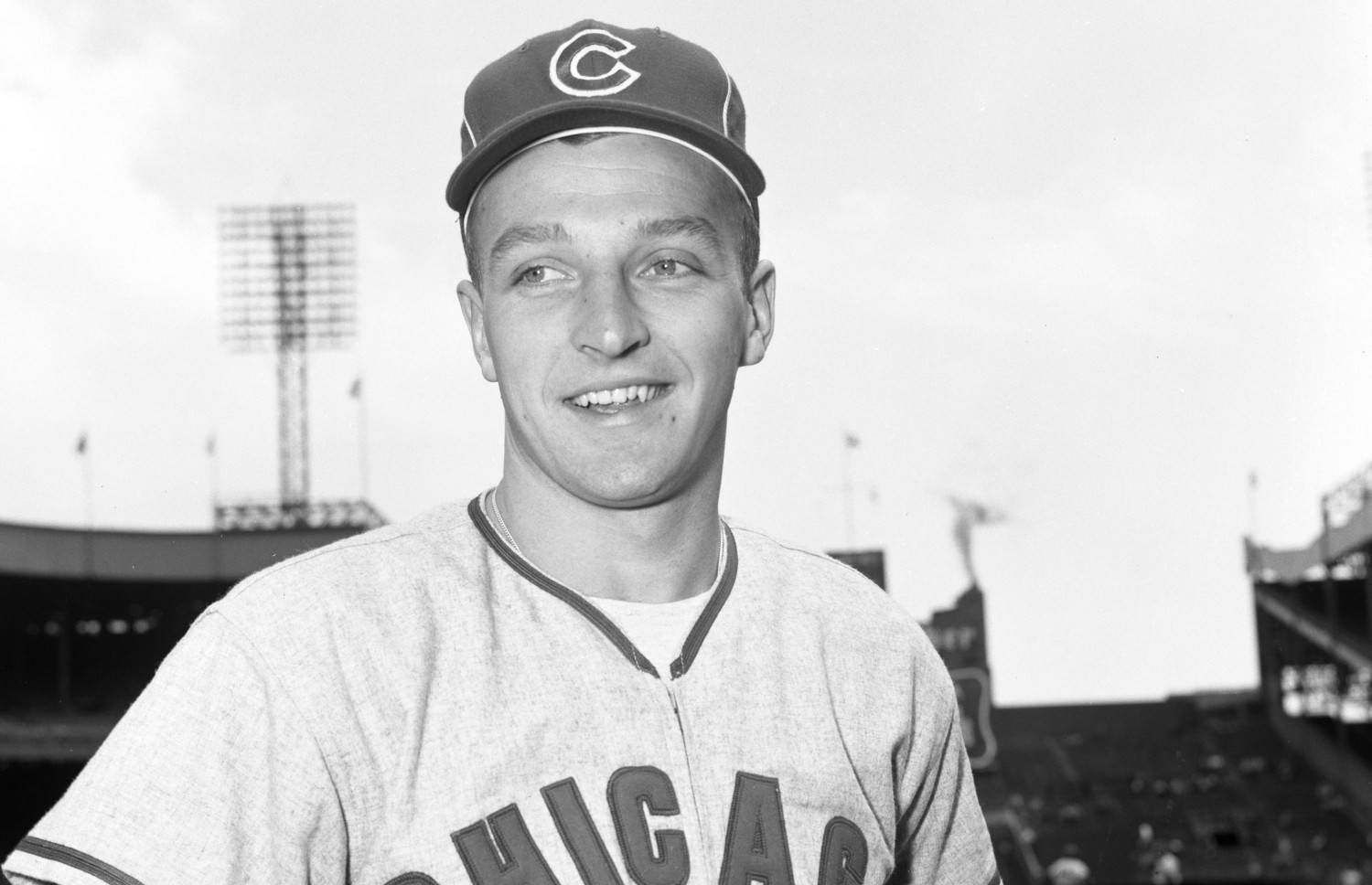
Moe Drabowsky was born in Poland in 1935. In 1956, he broke into the majors as a pitcher for the Chicago Cubs. Over the next 10 years with four different teams, his record was a paltry 48-81. Three times his teams finished last. It seemed as if his career was going no- where, a dead end, with the then hapless Kansas City Athletics.
Then, in 1966, he signed with the Baltimore Orioles. He went 6-0 that year and won a game in the World Series for the champion Orioles. He earned another ring with Baltimore in 1970, pitching well in the World Series again. After 1966, his record was a sterling 40-24 during that span. It was like Moe got a new lease on life that year.
In the spiritual realm, God has always been in the business of giving people a new lease on life. David got one after falling into sin as did Samson. Peter got one after denying Jesus three times. Paul got one after misplacing his zeal in Judaism.
What about you? Is your life heading in the wrong direction? James 4:8 says, “Draw near to God and He will draw near to you.” If you’re not a Christian, or if you are a Christian who wandered off the path, you can get a new lease on life this year…or this day…or this hour. Come to Jesus.
This devotional was taken from our quarterly Training Table, a 13-week devotional in each of our print issues. To access our most recent Training Table, click HERE. To subscribe to Sports Spectrum, click HERE.
From left to right: Juliana Smith, general manager for Baylor women's basketball; Paul Putz, director of the Faith & Sports Institute; and Linda Livingstone, president of Baylor University. (Photo courtesy of Paul Putz)
In my role as director of the Faith & Sports Institute (FSI) at Baylor University’s Truett Seminary, I get to spend my time studying, thinking and teaching about the place of sports in our culture and in the Christian life.
And I can tell you: Sports seem to be having a moment right now.
True, our culture has been obsessed with sports for a long time. The ongoing popularity and interest are no surprise. But what is different is the range of people and organizations paying attention these days. Intellectuals, scholars and journalists who in the past might have dismissed sports as a trivial activity are singing its praises as a place of connection, community and human flourishing. At the same time, they are drawing attention to new challenges, including the rise of sports gambling, the professionalization of youth sports, and the changing landscape of college athletics.
This attention gives Christians a great opportunity both to celebrate the good gifts of sports and to speak to areas of brokenness. With FSI, that is exactly what we try to do. Housed at a seminary and embedded in a Christian research university with major college athletics, we bring scholars and students, coaches and athletes, and pastors and chaplains together to learn, grow and explore. Our aim is to provide a space to examine and rediscover the deeper Christian meaning and purpose behind the sports we play and watch.
Teaching and learning are at the heart of what we do. Our students get hands-on experience putting ministry into practice by connecting the Church, the classroom and the fields of competition.
“FSI really broke down my understanding of sport as an athlete and gave me a brand-new understanding of how I see sport, how I see God, how I see myself,” he said. “It really shaped me to be a better listener, somebody who cares deeply and who is also able to see God even through the difficulties and the frustrations in sports.”
“Every single class has offered a way to contextualize what I’m learning straight into my ministry experience,” she said. “So, now I can understand better the athlete experience and the coach experience to better serve them and bring the Gospel to those spaces, and to see people begin to flourish because of it.”
Are you interested in a seminary program focused on sports, theology, and ministry leadership?
Join us later this month for a virtual information session and Q&A. Learn more about our classes, student life, scholarship opportunities, and more! pic.twitter.com/DgywsQrY7C
— Faith & Sports Institute (@FaithSportsInst) October 9, 2026
True to Baylor’s mission, we reach beyond our campus. We serve and collaborate with sports ministries, churches, colleges, high schools and sports leagues. We also work to shape public conversation with award-winning scholarship and collaborative research.
If you are interested in exploring and studying sports from a Christian perspective, we would love to hear from you. Check out our programs and offerings to see if something might be right for you.
Sports cannot fulfill our deepest longings or solve all of our social problems. But they do provide opportunities for Christian witness and service, and a cultural space where we can celebrate our God-given bodies even as we grow in virtue, strengthen bonds of community, and explore what it means to be human.
Tyler Toney of Dude Perfect (left) sings with Christian musician Brandon Lake at the end of one of their tour shows. (Photo via Facebook/@DudePerfect)
Dude Perfect has gained a massive online following for their viral trick-shot videos that started in 2009 when they were college students at Texas A&M. Nearly 20 years later, the group of friends is packing arenas for live shows and has millions of fans across various social media platforms, namely YouTube.
And now more than ever, they’re adamant that their mission goes much further than just entertaining people.
They just wrapped up their Squad Games Tour, which featured immersive arena-floor battle zones, trick-shot challenges, and special guest competitors. They performed for more than 180,000 fans in 22 cities.
They also closed out their shows this summer with songs of praise and worship. Some of the biggest names in Christian music — such as Brandon Lake, Kari Jobe, Cody Carnes, Jeremy Camp, Cory Asbury and Chris Brown from Elevation Worship — joined the guys on stage. Dude Perfect’s Tyler Toney even joined in on guitar and vocals, and at least one night led worship by himself.
This new worship element further emphasizes DP’s mission to use the platform they’ve been given — 62.5 million subscribers on YouTube, 19.1 million on TikTok, and 13.1 million on Instagram, for example — to glorify God. “There’s more to Dude Perfect than just having fun,” their website reads. “We’re about giving back, spreading joy, and glorifying Jesus Christ.”
The worship set was in addition to the presentation of the Gospel message at the end of their shows, which they began trying in 2021.
“While all those things (fame and accomplishments) are great and good things can come with them,” Toney told the crowd this summer in Cincinnati, “none of those things in any amount compare to the joy of knowing Jesus Christ as our personal Lord and Savior.”
It was in 2020 that Toney felt God calling him and the guys — Garrett Hilbert, Cody Jones and twins Cory and Coby Cotton along with Toney — to be more intentional about sharing their faith.
“We’ve always tried to bring faith into it,” Hilbert told Sports Spectrum in 2023. “We’ve never really known how, because at the end of the day, it is polarizing and we’ve always tried to figure out a way to say it in the best way to put Christ first. And then Tyler was like, ‘Man, I really feel like Christ has been putting on my heart … to share the Gospel with the [audiences on tour].’ We were like, ‘Man, it sounds awesome.’ I think we were all just nervous, like how it was going to go.”
After their first live tour in 2019 was a hit, they had to cancel the 2020 tour due to the COVID pandemic. Their Fall 2021 tour was the first time a mini-sermon was part of the show. The biggest question was where in the show to do it.
“I didn’t want people to feel like they were tricked into coming to something and then we were going to smack them on the head with the Bible and be like, ‘I got you,'” Toney told Sports Spectrum.
They decided that they would do the show as everyone expected, and then at the end extend an open invitation for people to stick around to hear them share about “what’s most important in our lives and why we feel like we’ve got this platform in the first place.”
The first night, they left the stage to grab a drink of water and reset. They were stunned to see how many people had stuck around.
“I went out there and just blacked out,” Toney said. “I couldn’t even tell you what I said, but obviously the Holy Spirit intervened.”
Toney remembers walking off the stage after sharing the Gospel for the first time. He broke down crying because he was overcome with emotion.
“It was the first time when I felt like God was like, ‘This is what I want you to do with this platform,'” he said. “‘This is why I have given the five of you guys this platform. This is why so many kids look up to you, is to be able to share this with them.'”
Years later, that message is still being shared, now with a worship experience as well.
All five of the members were raised in Christian homes. Toney and Hilbert went to high school together in Prosper, Texas, before heading to Texas A&M. It was there that they met Jones and the Cottons. Their first video was a grainy compilation of the guys making various trick shots into a portable basketball goal.
That video now has nearly 46 million views and helped launch them into online stardom. Now they film the majority of their videos out of a customized 80,000 square foot warehouse in Frisco, Texas, that’s fit with a basketball court, a 45-yard football field, a custom mini-golf course and much more.
Toney now looks back and sees how God’s hand has been over each of the guys, even before they met in college.
“It’s really cool to see this platform is given to us for more than just our own success,” Toney said in “The NEW World’s Highest Basketball Shot” video. “The amount of control that we have over things — over Dude Perfect, over the world, over our circumstances — is very little. But whatever God blesses us with, and whatever successes that we do have, we’re going to continue to point back to Him and give Him the glory for it. And that’s the way that we’re going to continue to look at it as long as Dude Perfect is a thing.”
On Friday, March 21, sophomore gymnast Brooke Gleichowski was named to the 2026 SEC Gymnastics Community Service Team, an honor that reflects her dedication not only as a student-athlete, but as a leader in the greater-Athens community. https://t.co/zOY5iaIxmn
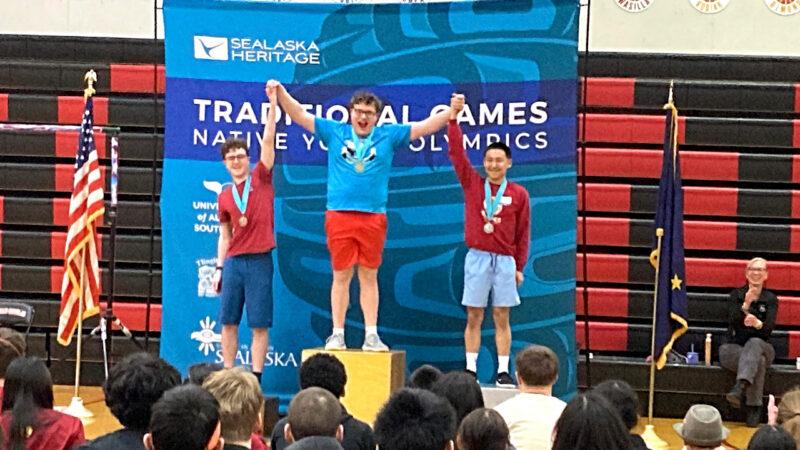
Daniel (left) and Joseph Rodgers wearing medals from an NYO competition. (Photo courtesy of Rodgers family)
For thousands of years, the indigenous tribes of the northernmost parts of the globe relied on a set of athletic skills needed to survive in harsh conditions. Over the centuries, these skills became cultural athletic contests involving kicks, jumps, reaches and other tests of endurance and strength.
Then in Anchorage, Alaska, in 1971, in order to preserve these traditional contests in a quickly developing world, the first ever Native Youth Olympics (NYO) were held. Interest and participation in NYO, or what is often known as arctic sports, has exploded in the decades since. It has now extended far beyond indigenous tribes and even sometimes beyond the global north to countries like Mexico and New Zealand.
Held in March in Whitehorse, a city in the Yukon territory of Canada, the 2026 Arctic Winter Games were a celebration of athleticism, competition and cultural pride. Around 2,000 athletes participated, with Team Alaska taking home the most medals (227, 78 golds). The Arctic Winter Games are held every two years and can be thought of as a “Northern Olympics.” These Games include, but are not limited to, arctic sports competitions. It may be the most important athletic competition in Alaska.
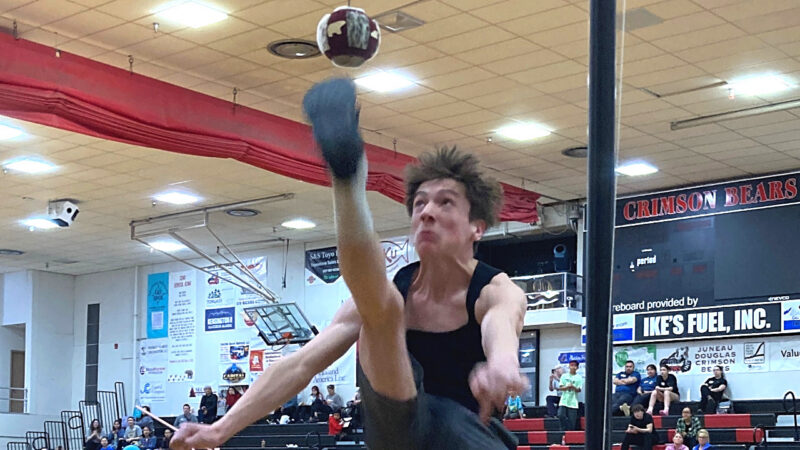
Two Team Alaska athletes (who appear in the video above), Daniel and Joseph Rodgers, are brothers who share a passion — and an aptitude — for arctic sports. Daniel, a 16-year-old who was born prematurely and lives with a variety of disabilities, won gold in the teen arm pull and silver in the Alaskan high kick at the Games. Meanwhile, he also took home an impressive three Fair Play Awards recognizing his sportsmanship. And sportsmanship, Daniel’s mother, Elizabeth, says, is highly valued in arctic societies.
“For this culture, to receive a sportsmanship award,” Elizabeth told Sports Spectrum, “it’s more important than receiving a gold because it’s what you can contribute to the community that gives it the highest value.”
Daniel is well aware of the significance of his sportsmanship awards.
“I really feel honored about that,” he told Sports Spectrum. “I’m really happy that the other teams chose me.”
Not to be outdone, Joseph, 14, also captured two silvers and two bronzes at the Games. Joseph’s ability in arctic sports at such a young age is exceptional.
Both brothers currently hold records in various events, sometimes having to surpass each other to reach them. Elizabeth can hardly believe the success her teenagers (she also has a younger son named Luke) have had in arctic sport competition, but she is certain it’s been a divinely inspired journey.
“It’s almost like God’s brought us full circle in a story that we never even thought about, (that) there could be cross-cultural sports,” she said. “So all the giftings that we have, God’s using in a completely different way that we never picked for ourselves.
“It’s just amazing to me to see how we can be involved as a whole family in the different ways that we’re created.”
Daniel winning an award. (Photo courtesy of Rodgers family)
Elizabeth and her husband, John, were missionaries in Mexico when Daniel was born at just 26 weeks. He was 1 pound, 15 ounces, and quality medical care was hours away. He was profoundly deaf, his vision was impaired, he has severe myopia, and he was diagnosed with ADHD.
“Every breath that he took was a miracle,” Elizabeth remembered.
That little baby, barely heavier than the balls he now soars to kick, changed everything. Gone were the Rodgers’ dreams of missionary life. Instead, they moved 13 times in Daniel’s first few years trying to meet his extensive medical needs. American Sign Language (ASL) was necessary. Communicating any Biblical truth seemed a pipe dream, as the Bible hasn’t existed in ASL until recently.
“That was a pretty rough start for me,” Daniel said. “I was pretty much fully deaf when I was born.”
Yet with each passing milestone, the message God first delivered to Elizabeth during those early days in the NICU — as she scoured the Psalms for an ounce of hope — grew louder.
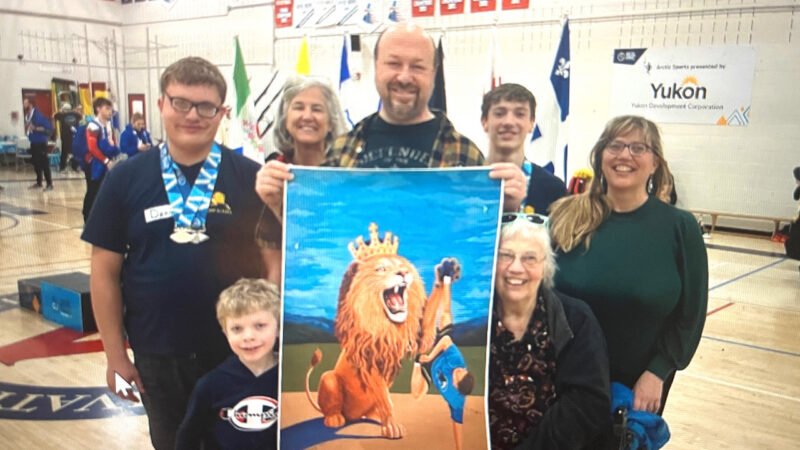
“I saw, as clear as could be, this lion roaring over Daniel in the NICU and over his incubator,” she said. “It was really vivid, dramatic, and that kind of set the tone I feel like for his whole life where God’s roared over him. Circumstances and things change, and He does the impossible. So that’s kind of a repeated theme in his life.”
The Rodgers family with a painting of a roaring tiger. (Photo courtesy of Rodgers family)
By third grade, Daniel was excelling with bilateral cochlear implants, and he had found an athletic outlet in the form of arctic sports.
“I just really enjoyed the event itself,” he said. “… I just had the passion to compete for it.”
It’s a challenge that for Daniel is intertwined with his faith in Jesus.
“I view Him as my Lord and Savior,” Daniel said. “I dedicated my life to Him. I’ve asked for forgiveness. … I try the best I can to hold the morals in the Bible and what it talks about.”
Daniel finds himself praying often during competition, and his awareness of God’s presence gives him a deep sense of peace.
“[Daniel’s story is] not a story of ‘try hard and your dreams will come true.’ It’s a story that God chose him from his birth, and He’s writing his story and He’s doing things by the power of His Spirit,” Elizabeth said. “And when we cooperate with Him … He can do things we could never dream of.”
Faith in Christ is at the forefront of Joseph’s mind when he competes, as well. With Christian music thumping in his headphones and a faith-based necklace around his neck, several Bible verses often come to mind as he sizes up his next jump or kick. His nights often end by spending time in God’s Word.
“As I got older,” Joseph said, “I wanted to look deeper into [Christianity]. You know how some people say they’re Christians but don’t know anything about it? I didn’t want to be like that. I wanted to actually understand why I believe what I believe.”
Elizabeth often finds herself struck by God’s goodness to her and her family.
“To me, it just feels absolutely miraculous,” she said. “Like it’s a story that I could never have conceived and ever dreamed of. … I feel that one of my jobs as a mom is to help [my kids] discover God’s mission for their life and His calling for each one of their lives. And in our family, it happens to be that they have this wild calling for NYO!”
Joseph competing in the high kick. (Photo courtesy of Rodgers family)
At each competition, when Daniel and Joseph aren’t busy winning medals, the Rodgers family can be found passing out tracts with a picture of a roaring lion and Daniel’s story on the back. It’s a story that doesn’t make medical sense, but in God’s equation, it’s just one example of His perfect power and steadfast love for His children.
And as they seek to spread the Good News of the Gospel to the arctic sports community and spread the excitement of arctic sports to the rest of the world, they are ambassadors who one day dream of seeing arctic sports included in the Winter Olympics. It may seem unlikely, but they’ve each seen God do much, much more.

 “O wretched man that I am! Who will deliver me from this body of death?” Romans 7:24